When you scroll through chats or social media and see someone say “I’ve got FOMO”, you instantly feel the vibe even if you can’t fully define it.
This blog breaks the term down in a way that feels natural, easy to understand and loaded with useful examples.
You’ll learn what FOMO means in text, how people use it across platforms, how it affects online conversations and why it shows up everywhere from group chats to dating apps.
Let’s jump in.
FOMO Meaning in Text
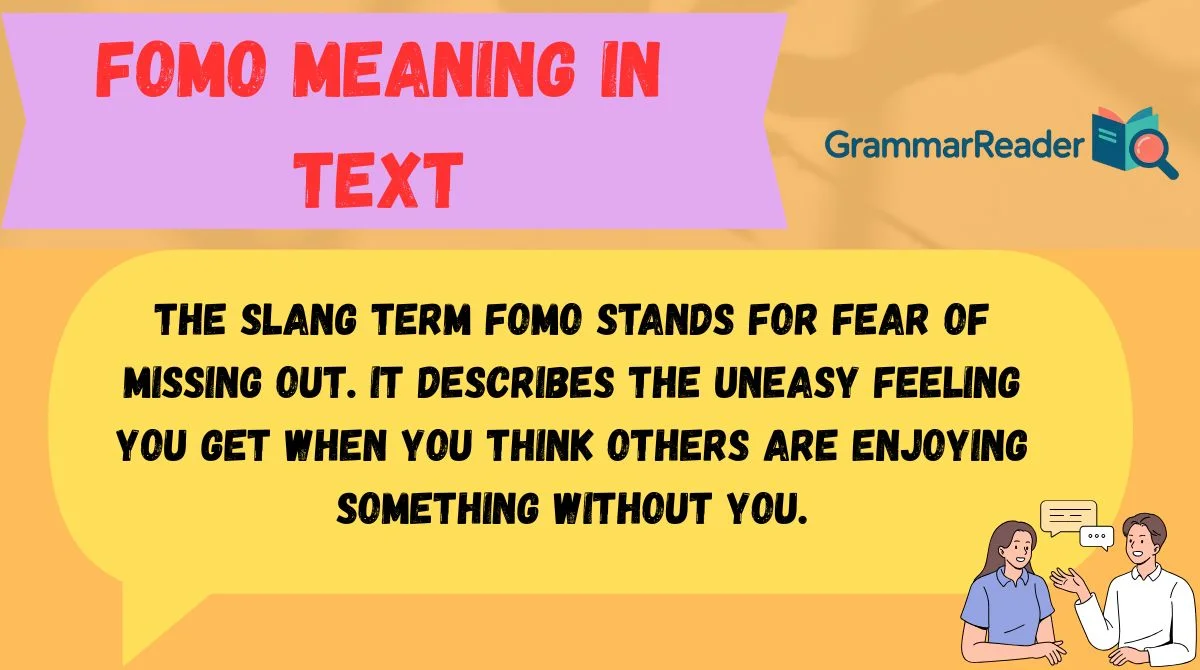
The slang term FOMO stands for Fear of Missing Out. It describes the uneasy feeling you get when you think others are enjoying something without you. When someone says it in a message, they’re expressing curiosity, disappointment, jealousy or social pressure.
People use FOMO in texts to:
- Show they want to join in
- React to someone’s fun plans
- Admit they feel left out
- Playfully say they don’t want to miss anything
- Express anxiety about choices or opportunities
Think of FOMO as a modern emotion wrapped into four letters.
What Does FOMO Mean in Text?
FOMO in text basically means you’re scared or worried you’re missing something exciting, important or exclusive.
It shows up because texting creates real-time communication. Stories, status updates and chats move fast. If others are doing something cool and you’re not there, FOMO kicks in.
Simple Example
Friend: “We’re all going to the beach.”
You: “Ugh FOMO! I wanna come!”
The message says: I don’t want to miss out on this experience.
Full Form & Core Meaning of FOMO
The full form is Fear of Missing Out. It represents a blend of:
- Curiosity
- Social pressure
- Anxiety
- Desire to belong
- Competition for attention
People use FOMO because digital platforms constantly show what everyone else is doing. When you see others having fun, traveling or succeeding, you compare your life to theirs even if you don’t intend to.
Core Meaning Table
| Term | Meaning | Emotional Tone |
|---|---|---|
| FOMO | Fear of missing out on something enjoyable, beneficial or important | Curiosity, anxiety, excitement |
| FOMO in text | Slang used in chats to express wanting to join or not miss something | Casual, playful or serious |
| Social FOMO | Fear of missing gatherings or events | Social pressure |
| Digital FOMO | Fear of missing updates, trends or news | Hyper-awareness |
Secondary & Expanded Meanings of FOMO
People don’t always use FOMO literally. It has several shades depending on the context.
Ways People Use FOMO Casually
- Joking tone: “You guys went for pizza without me? FOMO 😭”
- Teasing friends: “Posting pics just to give me FOMO?”
- Shopping decisions: “Should I buy it? I’m getting FOMO.”
Deeper or Serious Meaning
- Fear of missing life opportunities
- Anxiety from social comparison
- Pressure to stay constantly updated
- Feeling left out of group dynamics
You’ll see the term used lightly most of the time, but it can also reflect real emotional struggle.
Where the Term FOMO Came From
FOMO started as a psychological and marketing concept. It was later adopted into mainstream language.
Timeline Snapshot
- Early 2000s: Marketing experts use “fear of missing out” to describe consumer behavior.
- 2010–2015: Social media boosts its popularity.
- Present: FOMO becomes everyday texting slang used worldwide.
Digital platforms built around stories, feeds, and notifications make FOMO a constant part of modern communication.
How FOMO Is Used in Different Contexts
Casual Texting
You use FOMO to:
- Show interest
- Join plans
- React to friends’ outings
- Express excitement
Example:
“Everyone’s at the concert… major FOMO.”
Social Media
People use FOMO to talk about:
- Travel posts
- Parties
- Trending topics
- Viral challenges
- Lifestyle updates
Brands use it to create urgency:
- “Only 24 hours left!”
- “Last chance offer!”
Group Chats
FOMO appears when someone:
- Misses an event
- Didn’t know about a plan
- Wants updates
- Jumps into a conversation late
Professional Context
It’s rare but possible.
Used to express missing:
- Webinars
- Industry news
- Networking events
- Market trends
Example:
“I had FOMO seeing everyone at the conference this year.”
Platform-Specific Interpretations of FOMO
Each platform gives FOMO its own flavor.
- Used in family and friends groups
- Common in plan discussions
- Short, casual and emotional
- Mostly appears in stories, captions and comments
- Related to travel, nightlife and lifestyle
- High visual impact creates stronger FOMO
TikTok
- Used in trends and challenges
- Influencers often trigger FOMO accidentally
- Used humorously in captions
Snapchat
- Drives real-time FOMO through streaks and stories
- Teens use it heavily
- Used to react instantly to snaps
X/Twitter
- Connected to live events
- Sports, news, trending memes
- People tweet FOMO during concerts, matches or releases
Discord and Reddit
- Used in community events
- Gaming sessions
- Live streams
- Exclusive content drops
FOMO in Specialized Fields (Real Uses Only)
FOMO isn’t just slang. It appears in several professional fields too.
Psychology & Mental Health
Therapists use “FOMO” to describe:
- Anxiety triggered by social comparison
- Feeling socially excluded
- Obsessive checking of phones
- Fear of making the wrong life choices
Marketing
FOMO is a key strategy to influence consumers through:
- Limited-time offers
- Exclusive drops
- Countdown timers
- Social proof
Example: “Only 10 items left!”
Finance & Investing
Investors experience FOMO when:
- They follow hype
- Chase trends
- Fear missing profit
- Invest without research
Crypto markets show extreme FOMO behavior.
Common Misunderstandings About FOMO
People often confuse FOMO with other emotions. Here’s what FOMO is not:
FOMO is NOT:
- Jealousy
- Desperation
- Low confidence
- Toxic behavior
- A negative trait by default
Common Mistakes
- Thinking someone feels jealous when they simply feel left out
- Assuming FOMO is always dramatic
- Believing only teens feel FOMO
FOMO can affect anyone—students, employees, creators, even CEOs.
Similar Slang & Alternatives to FOMO
| Term | Meaning | When It’s Used |
|---|---|---|
| JOMO | Joy of Missing Out | When someone enjoys being offline or alone |
| FOBO | Fear of Better Options | When someone struggles to choose |
| YOLO | You Only Live Once | Encouraging bold choices |
| Left out | Feeling excluded | Emotional or social exclusion |
| Peer pressure | Influence from people | Teen or social group contexts |
These terms often appear together because they represent modern online behavior.
How to Reply When Someone Uses FOMO
Your response depends on the tone.
Casual / Friendly Responses
- “Come next time!”
- “Wish you were here!”
- “Don’t worry, we’ll plan something soon.”
Humorous Responses
- “Should’ve teleported!”
- “Your FOMO is valid 😂”
- “Get ready for more pics!”
Supportive Responses
- “You’re not missing much, promise.”
- “It’s okay to feel that way.”
- “Let’s plan something fun together.”
Serious Tone
When the person expresses real anxiety:
- “Want to talk about it?”
- “It’s normal. You don’t have to do everything.”
FOMO vs Similar Terms
Here’s how FOMO differs from the emotions people confuse it with.
FOMO vs Jealousy
- FOMO: Fear of missing an experience
- Jealousy: Fear of losing someone or something
FOMO vs Insecurity
- FOMO: Momentary emotional reaction
- Insecurity: Deep-rooted self-doubt
FOMO vs Peer Pressure
- FOMO: Internal feeling
- Peer pressure: External influence
Why FOMO Matters in Online Conversations & Dating Apps
FOMO plays a huge role in how people behave online.
Reasons FOMO Is Powerful Today
- Stories disappear after 24 hours
- People post highlight reels
- Real-time updates create pressure
- Dating apps show endless options
On dating apps, FOMO can make people:
- Swipe more than necessary
- Like multiple people
- Keep options open
- Fear committing too soon
It creates a cycle of:
compare → react → scroll → repeat
How Popular FOMO Is Today
FOMO remains one of the most widely used internet slang terms.
It’s especially common among:
- Gen Z
- Millennials
- Students
- Social media users
- Travelers
- Creators
Why It Stays Popular
- Fast-paced updates
- Social comparison
- Real-time notifications
- Fear of being left behind
- Digital lifestyles
FOMO isn’t going anywhere.
FAQs About FOMO Meaning in Text
What does FOMO mean in simple words?
It means you’re scared to miss something fun or important.
Is FOMO a real psychological term?
Yes, psychologists use it to study social anxiety and digital behavior.
Is FOMO good or bad?
Both. It can motivate you or make you anxious depending on the situation.
What’s the opposite of FOMO?
JOMO — Joy of Missing Out.
How do I stop feeling FOMO?
Limit screen time, focus on your goals and stop comparing yourself with others.
Conclusion
FOMO meaning in text goes far beyond a quick four-letter slang term. It reflects a modern emotional experience shaped by technology, trends and social pressure.
Whether you see it on Instagram, TikTok, WhatsApp or Snapchat, the message is simple: someone doesn’t want to miss out.
Understanding FOMO helps you communicate better, respond with empathy and stay mindful of how online life shapes your emotions. If you use the term, do it naturally.
If you feel it often, take a breath and remind yourself that you don’t need to be everywhere at once.
The goal isn’t to avoid FOMO completely. It’s to recognize it and stay in control.

Aiden Brooks is an educational writer dedicated to simplifying grammar for learners of all levels. He creates clear, practical explanations that help students read, write, and understand English with confidence.