When you jump into any chat today you’ll see short forms everywhere. Some feel obvious. Others make you pause. “DND” is one of those terms that pops up in texting, apps, and even real-world places.
You might think you know what it means. Most people do. Still you’ll discover that “DND” meaning in text shifts based on the situation, the platform, and even the person using it.
This guide walks you through every real use, no fluff, no guesses. You’ll get examples, quick replies, comparisons, and even small case studies that show how DND works in real conversations.
DND Meaning in Text
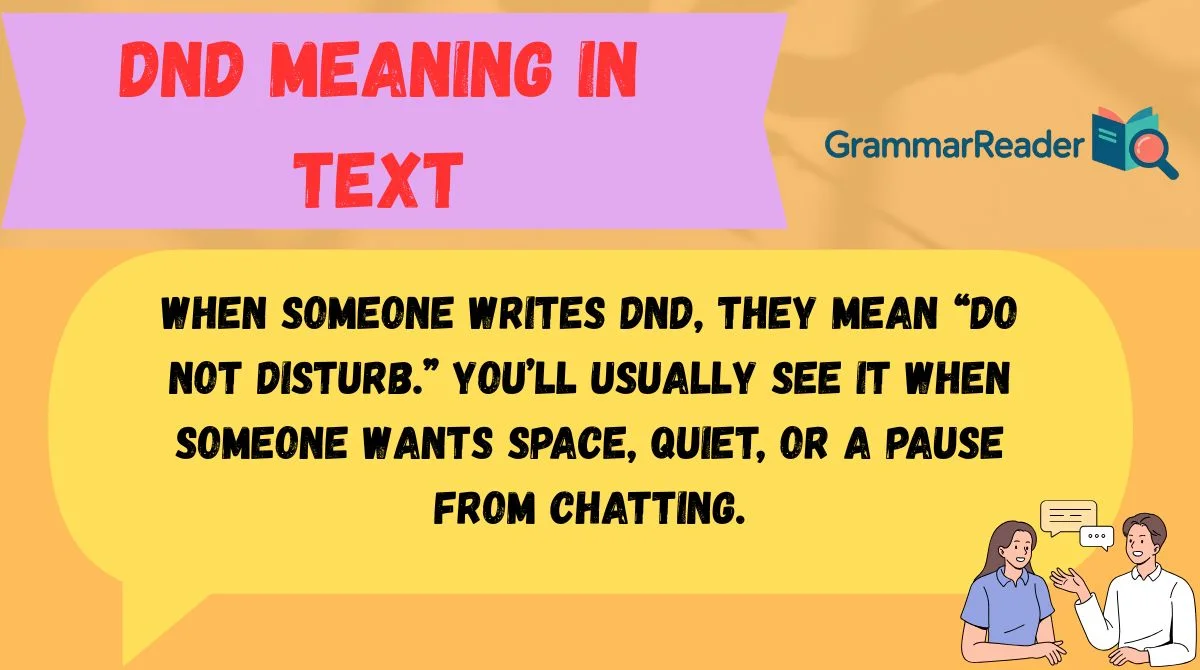
When someone writes DND, they mean “Do Not Disturb.” You’ll usually see it when someone wants space, quiet, or a pause from chatting.
It’s simple but powerful. One short code sets a boundary without sounding rude.
People use it to:
- Stop notifications
- Signal they’re busy
- Avoid interruptions
- Take a break from messages
- Focus on work, studies, or personal time
When used in text, it tells you:
“I’m unavailable right now. Let’s talk later.”
Where the Term DND Comes From
“Do Not Disturb” isn’t new. The phrase existed long before smartphones. It appeared in:
- Hotels (the iconic Do Not Disturb door sign)
- Offices
- Hospitals
- Studios
- Military communication
But the digital world turned it into the abbreviation DND.
How DND Entered Texting Culture
- Phone makers added DND mode to stop alerts
- Messaging apps adopted the status
- Gamers used it during missions or raids
- Professionals used it during meetings
- Teens and adults started using it in casual texts to say, “I’m unplugging for a bit.”
Today it’s fully embedded in online communication.
How DND Is Used in Modern Texting
Below you’ll see how people use DND meaning in text in real conversations.
DND Meaning in Text for Casual Chats
Friends often use DND to:
- Avoid late-night pings
- Study without distractions
- Watch a movie in peace
- Take mental breaks
- Skip group chat chaos
Examples:
- “Putting phone on DND for an hour, need silence.”
- “DND. I’ll reply when I’m done.”
People appreciate honesty. Saying DND avoids misunderstandings.
DND Meaning in Social Media
Social apps turn DND into a status or mode. You’ll see it used for:
- Instagram “quiet mode” vibes
- Snapchat streak breaks
- WhatsApp “Do Not Disturb” profile status
- TikTok captions like: “Mental reset. DND.”
It signals emotional space or privacy without writing a long explanation.
DND Meaning in Professional Communication
In work environments, DND shows professionalism.
People use it when:
- They’re in meetings
- Working on deadlines
- Deep-focus sessions
- Presenting
- Traveling
Examples:
- “In DND till 3 PM. Please email anything urgent.”
- “Set Slack to DND while preparing reports.”
This avoids interruptions and keeps workflows smooth.
DND in Gaming Communities
This is where DND blew up.
Gamers use it for:
- Ranked matches
- Raids
- Streaming
- Esports practice
- Avoiding non-game notifications mid-battle
Platforms like Discord, Steam, and Xbox have built-in DND status mode.
Example:
- “Setting DND. Raiding with squad.”
Gamers treat DND seriously. It means “Don’t message unless urgent.”
DND Meanings Across Platforms
| Platform | What DND Means | What It Actually Does |
|---|---|---|
| iPhone | Do Not Disturb Mode | Silences alerts, keeps phone quiet, notifications still arrive silently |
| Android | Do Not Disturb Mode | Blocks sound, vibration, can allow priority contacts |
| Used in status | No built-in DND but people use it manually | |
| Similar to Quiet Mode | Reduces notifications | |
| Snapchat | Custom | People use “DND” in captions/bitmojis |
| Discord | DND Status | Blocks message ping sound |
Key point: Most platforms still deliver messages even if the user is in DND.
Other Places Where DND Appears
You’ll see DND outside texting too.
Hotels
The famous DND door sign signals privacy.
Healthcare
Patient rooms sometimes tag DND to avoid interruptions.
Aviation & Military
Aircraft communication uses DND for “restricted communication periods.”
Studios
During recording or filming, DND prevents entry.
Corporate Settings
Meeting rooms often have DND lights or digital indicators.
Common Misunderstandings About DND
Many people assume things that aren’t true. Let’s clear them up.
Myth: DND means the person is ignoring you.
Reality: They may simply be busy or focusing.
Myth: Messages don’t get delivered.
Reality: Messages still deliver. The phone just doesn’t make noise.
Myth: DND = Airplane Mode.
Reality: Airplane mode cuts signals. DND only silences them.
Myth: DND means the same in every context.
Reality: Tone and intention vary with the relationship.
Similar Terms & Alternatives to DND
Here are words that often appear where DND is used:
| Term | Meaning | Difference From DND |
|---|---|---|
| AFK | Away From Keyboard | Used mostly in gaming |
| BRB | Be Right Back | Temporary break |
| Busy | Occupied | Not as formal as DND |
| Unavailable | Not reachable | Broader meaning |
| Silent Mode | Phone setting | Only mutes sounds, no status signal |
| Mute Chat | Disable chat alerts | Doesn’t tell others you’re away |
These help you guess the tone when someone prefers alternatives.
How To Respond When Someone Texts You “DND”
People worry they’ll sound rude if they reply wrong. Here’s what works.
Simple Respectful Replies
- “Got it. Talk later.”
- “No problem.”
- “Sure, I’ll message later.”
If it’s professional
- “Acknowledged. I’ll update you once you’re available.”
If the relationship is close
- “Go rest, I’ll be here.”
- “Take your time.”
If urgent
Always clarify with respect:
- “It’s urgent. Ping me when free?”
Chat-Style Examples
Friend: “Putting phone on DND for now.”
You: “Cool, enjoy the break.”
Coworker: “DND till meeting ends.”
You: “Understood. Will email updates instead.”
Partner: “DND. Need a breather.”
You: “Take space. Text me when ready.”
DND vs Similar Words
Let’s remove confusion.
DND vs Airplane Mode
- DND = Silence mode
- Airplane mode = No signal at all
DND vs Silent Mode
- Silent = No sound
- DND = No sound + message filtering + auto-rules possible
DND vs Block
- Block = User cannot message you
- DND = Messages still arrive silently
DND vs Muted Chats
- Muting affects specific chats
- DND affects the whole device
Why DND Matters in Today’s Online World
People face information overload daily. An average smartphone user gets:
- 80+ notifications per day
- 20–30 chat messages
- Constant calls, pings, alerts
DND helps people protect mental space.
Digital Boundaries Are Normal Now
More people use DND to:
- Reduce anxiety
- Stop burnout
- Focus at work
- Improve sleep
- Manage social energy
Dating Apps & “DND Behavior”
On dating apps, DND behavior can mean:
- Someone is overwhelmed
- They need processing time
- They’re not ignoring you intentionally
It helps reduce miscommunication.
FAQs About DND Meaning in Text
What does DND mean in texting?
It means Do Not Disturb, signaling the person is unavailable or wants silence.
Does DND block messages?
No. It only silences notifications. Messages still deliver normally.
Is DND the same as Airplane Mode?
Not at all. Airplane Mode cuts connection. DND only removes disturbances.
How do I know what someone means by DND?
Look at context: casual chat, work mode, emotional space, or just device settings.
Can DND mean something else?
Rarely, but gaming, hotels, and military also use it for “Do Not Disturb.”
Conclusion
Understanding DND meaning in text helps you avoid awkward moments and improves communication. You now know how it works across platforms, how people use it in daily life, how to respond respectfully, and how to interpret tone.
DND isn’t a rejection. It’s a boundary. It’s a small reminder that everyone needs quiet moments.
Use it wisely. Respect it when you see it. And let it help you create smoother, healthier digital conversations.

Aiden Brooks is an educational writer dedicated to simplifying grammar for learners of all levels. He creates clear, practical explanations that help students read, write, and understand English with confidence.