Choosing the right recommendation phrase can completely change how your message sounds.
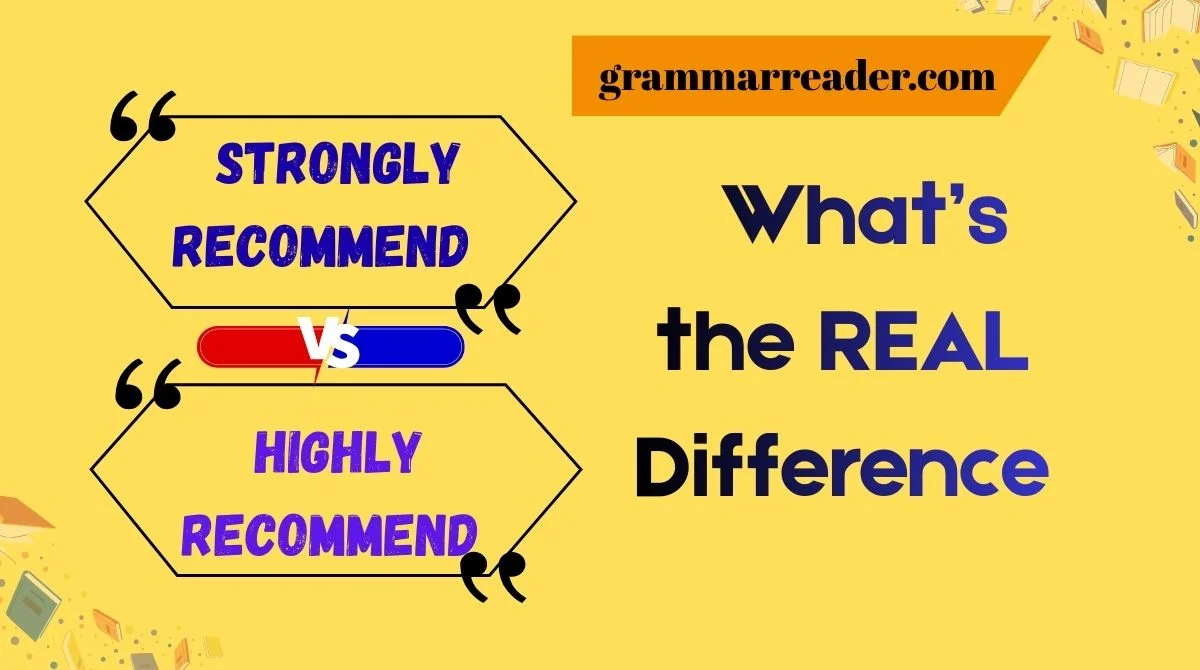
And when it comes to “strongly recommend” vs “highly recommend,” the two may look similar — but they don’t feel the same.
This guide breaks down those differences with clear explanations, real examples, tables, case studies, and practical tips so you know exactly when each phrase works best.
Strongly Recommend vs Highly Recommend: The Complete Guide
Introduction: Why Recommendation Wording Matters
Language shapes perception. A simple phrase like “I recommend this” might sound neutral, but change it to “I strongly recommend this” or “I highly recommend this” and suddenly:
- The tone shifts
- The urgency changes
- The reader’s expectations adjust
These phrases affect how people interpret your advice—especially in reviews, professional communication, product recommendations, or even friendly advice.
Understanding these differences helps you choose the right level of intensity, avoid sounding dramatic, and communicate with more confidence and clarity.
What “Strongly Recommend” Actually Communicates
At first glance, “strongly recommend” sounds like a simple upgrade from “recommend.”
But in practice, it carries deeper meaning.
Core Meaning and Emotional Weight
When you “strongly recommend” something, you’re not just supporting it—you’re pushing for it.
It shows:
- Strong conviction
- Personal investment
- Emotional intensity
- A sense of urgency
You’re not just giving advice — you’re practically insisting.
How It Signals Urgency or Seriousness
“Strongly recommend” is often used when:
- There’s a clear benefit
- There’s a potential risk
- You want to guide someone away from making a bad decision
Examples:
- “I strongly recommend backing up your files regularly.”
- “I strongly recommend avoiding this route; it’s unsafe at night.”
Situations Where Intensity Matters
People typically use “strongly recommend” when:
- They feel responsible for the outcome
- Their personal experience was highly impactful
- They want to express serious concern or enthusiasm
Risks of Overusing “Strongly Recommend”
Using it too often can:
- Make you sound dramatic
- Suggest emotional exaggeration
- Reduce the impact of your recommendations
Pro tip: Use it when the stakes actually feel high or personal.
What “Highly Recommend” Actually Communicates
“Highly recommend” is more neutral and polished. It suggests you approve of something based on quality or performance, not emotion.
Core Meaning and Tone
“Highly recommend” communicates:
- Professional approval
- Credibility
- Confidence
- Positive experience
It sets the tone of a well-considered endorsement, not an urgent plea.
When Professionalism or Neutrality Is Preferred
People often use “highly recommend” in:
- Reviews (products, services, travel)
- Professional emails
- Testimonials
- Business communication
It sounds polished, objective, and reliable.
Better Than “Strongly” When You Want to Sound
- Neutral
- Credible
- Balanced
- Sophisticated
Example:
“I highly recommend this laptop for business users.”
Strongly Recommend vs Highly Recommend: The Real Differences
Here’s a quick comparison table to make things clearer:
| Aspect | Strongly Recommend | Highly Recommend |
|---|---|---|
| Tone | Emotional, urgent | Professional, confident |
| Implies | Conviction, personal stake | Quality, positive experience |
| Common in | Advice, warnings, personal opinions | Business reviews, testimonials |
| Sounds like | You insist | You approve |
| Intensity level | High | Medium–high but controlled |
Tone Comparison
Strongly feels like you’re emotionally invested.
Highly feels like you are confident but rational.
Personal vs Objective
- Strongly = personal conviction
- Highly = objective approval
How Audiences Interpret Them
A reader may think:
- “Strongly recommend” = You really want me to do this.
- “Highly recommend” = This must be great quality.
Choosing the Right Phrase Based on Context
You don’t want to use these phrases randomly. The best choice depends heavily on the situation.
Professional Communication
Best phrase: Highly recommend
Why?
- It’s neutral
- Sounds polished
- Doesn’t feel emotional
Examples:
- “I highly recommend Sarah for the project.”
- “I highly recommend this accounting software.”
Personal Communication
Best phrase: Strongly recommend
Because you want to express personal importance.
Examples:
- “I strongly recommend you try this routine. It helped my back pain disappear.”
Customer Reviews
Both can work, but:
- Use highly recommend for products & services
- Use strongly recommend when describing a personal impact
Marketing & Brand Messaging
Best phrase: Highly recommend
It’s safer, more credible, and widely accepted.
Real Examples: How “Strongly” and “Highly” Change Meaning
Travel Example
Scenario: You’re recommending a hiking trail.
Strongly Recommend:
“I strongly recommend carrying extra water; the trail gets brutally hot in the afternoon.”
Highly Recommend:
“I highly recommend visiting this trail if you love scenic views and quiet nature spots.”
See the difference?
- One warns
- One praises
Product Example
Scenario: Reviewing a laptop.
Highly Recommend:
“I highly recommend this laptop for designers. The color accuracy is superb.”
Strongly Recommend:
“I strongly recommend getting the extended warranty for this laptop.”
Different intentions, different tones.
Service Example
Scenario: Recommending a mechanic.
Highly Recommend:
“I highly recommend John’s Auto Repair—fast, honest, and affordable.”
Strongly Recommend:
“I strongly recommend never skipping your routine oil change.”
Effective Alternatives to Each Phrase
Sometimes you want variety in your writing. Here are alternatives that fit the tone.
Alternatives to “Strongly Recommend”
Use these when you want urgency or emotional emphasis:
- “I urge you to…”
- “It’s essential that you…”
- “You should definitely…”
- “I can’t emphasize enough…”
- “Please consider…” (softer but still strong)
Best use cases: Advice, warnings, personal insights.
Alternatives to “Highly Recommend”
Use these when you want objective approval:
- “I enthusiastically recommend…”
- “I confidently recommend…”
- “This is an excellent choice for…”
- “I fully endorse…”
- “This stands out as one of the best…”
Best use cases: Reviews, business communication, service evaluations.
Quick Decision Guide
When in doubt, choose based on this simple rule:
| Use When | Choose |
|---|---|
| Emotion, urgency, personal experience | Strongly recommend |
| Credibility, professionalism, neutrality | Highly recommend |
Use “strongly recommend” when…
- You feel personally invested
- There is urgency or risk
- You want to influence a close friend or family member
Use “highly recommend” when…
- Writing reviews
- Communicating professionally
- Sharing quality-based endorsements
Case Studies: How These Phrases Influence Readers
Case Study 1: Restaurant Review
Review A (Strongly Recommend):
“I strongly recommend booking a reservation early; the place fills up fast.”
Review B (Highly Recommend):
“I highly recommend the seafood platter—it’s incredibly fresh and flavorful.”
Interpretation:
- A feels like advice
- B feels like quality assurance
Case Study 2: Fitness Advice
Strongly Recommend:
“I strongly recommend using proper posture when lifting weights. It prevents injuries.”
Highly Recommend:
“I highly recommend this fitness tracker for accurate heart-rate monitoring.”
Interpretation:
- Strongly = safety
- Highly = product endorsement
Case Study 3: Workplace Endorsement
Highly Recommend:
“I highly recommend Priya for the team lead position. She consistently exceeds goals.”
Strongly Recommend:
“I strongly recommend avoiding the Friday deployment window; it always causes delays.”
Interpretation:
- Highly = professional endorsement
- Strongly = operational warning
FAQs
What is the difference between “strongly recommend” and “highly recommend”?
“Strongly recommend” expresses urgency and personal conviction. “Highly recommend” expresses confidence and professional approval.
When should I use “strongly recommend”?
Use it when your advice has emotional weight, urgency, or personal importance.
Is “highly recommend” less personal than “strongly recommend”?
Yes. “Highly recommend” is more neutral and objective.
Can I use “highly recommend” in professional reviews?
Absolutely — it is the preferred phrasing for professional or formal communication.
Are there alternatives to these phrases?
Yes — alternatives include “I urge you to,” “I endorse,” “I confidently recommend,” and “I can’t emphasize enough.”
Conclusion
Both “strongly recommend” and “highly recommend” are powerful phrases—but they’re not interchangeable.
The key difference lies in tone and intention:
- “Strongly recommend” shows urgency, emotion, and personal conviction.
- “Highly recommend” shows confidence, quality endorsement, and professionalism.
Choosing the right phrase helps you communicate clearly, persuasively, and naturally—whether you’re giving advice, writing reviews, or offering professional opinions.

Aiden Brooks is an educational writer dedicated to simplifying grammar for learners of all levels. He creates clear, practical explanations that help students read, write, and understand English with confidence.