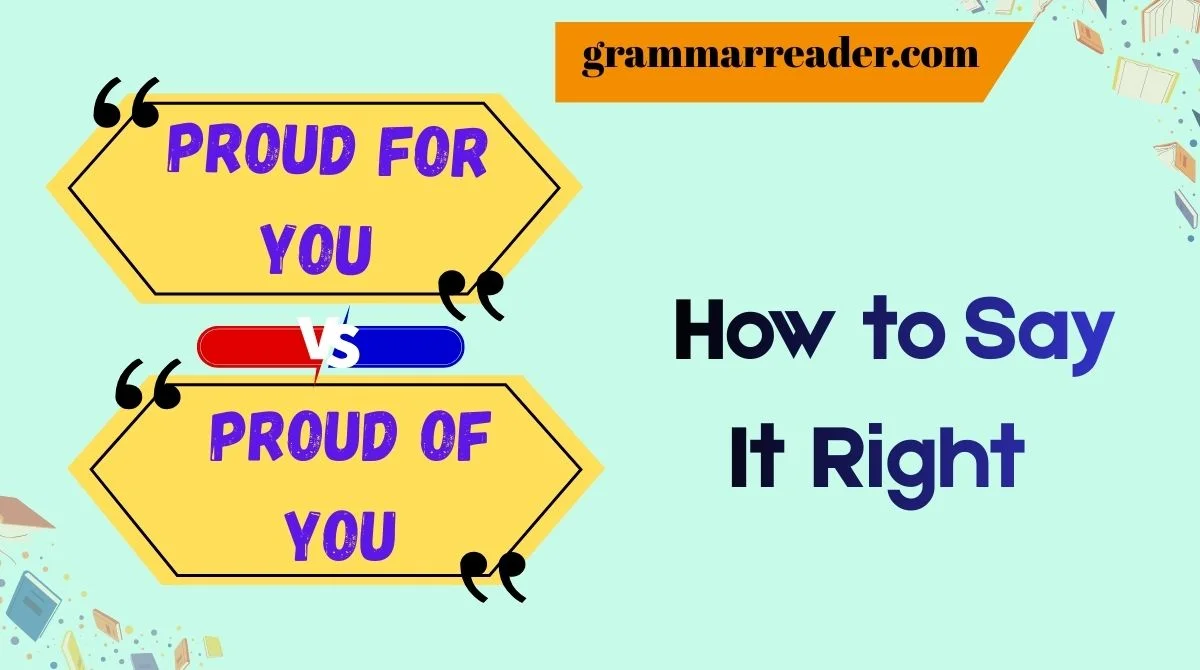
Language is full of tiny phrases that carry huge meaning. One of the most misunderstood is the difference between “proud of you” and “proud for you.”
While both may seem interchangeable at first glance, using them correctly can make a big difference in how your message is received.
Saying the right phrase conveys genuine emotion, strengthens relationships, and keeps your English sounding natural.
In this article, you’ll get a deep dive into the proper usage of these phrases, why one sounds awkward, and how to express pride effectively.
Understanding the Core Concept of Pride in English
Pride isn’t just about grammar. It’s about emotion, recognition, and connection. When you tell someone you’re proud, you’re signaling that you notice their effort, value their achievement, and want them to feel validated.
In English, the preposition you pair with “proud” shapes the meaning. Using the wrong one can make your sentence sound off or confusing. Let’s explore why.
Proud of You – The Standard Expression
The phrase “proud of you” is the correct, natural way to express pride in English.
Grammar Breakdown:
- Proud (adjective) + of (preposition) + you (object).
- Example: “I’m proud of you for finishing the marathon.”
Why it works:
- English speakers naturally pair “proud” with of when expressing personal acknowledgment of someone’s achievements.
- It communicates direct pride without ambiguity.
Everyday Examples:
- “I’m proud of you for getting that promotion.”
- “She was proud of you for speaking up in the meeting.”
- “We are proud of you for graduating with honors.”
Emotional Impact:
Using “proud of you” conveys genuine warmth and recognition. It makes the listener feel seen, valued, and appreciated.
Proud for You – Why It Sounds Awkward
Many learners make the mistake of saying “proud for you.” While it seems logical, English doesn’t generally pair “proud” with for when referring to someone else’s achievements.
Grammar Insight:
- “Proud” is an adjective that expresses a personal emotion about another’s action.
- Of is the preposition used to connect that emotion to the person.
- “For” implies causation or benefit, which changes the meaning and often sounds strange.
Incorrect Examples:
- ❌ “I’m proud for you that you graduated.”
- ❌ “He’s proud for you of your award.”
Rare Exceptions:
Sometimes, “for” might appear in informal speech:
- “I’m proud for you if this makes you happy.”
But here, it doesn’t express pride directly; it’s more about wishing well or being glad.
Comparing Proud of You vs Proud for You
Here’s a clear side-by-side comparison:
| Phrase | Correct Usage | Emotional Impact | Example |
|---|---|---|---|
| Proud of You | ✅ Standard | Strong, genuine | “I’m proud of you for graduating.” |
| Proud for You | ❌ Nonstandard/awkward | Confusing | “I’m proud for you that you graduated.” |
Quick Rule:
If you’re acknowledging someone else’s achievement, always use “proud of you.”
Common Mistakes and How to Avoid Them
Even native speakers sometimes trip over these phrases. Here’s what to watch out for:
Mistake 1: Swapping of and for
- ❌ “I’m proud for you”
- ✅ Correct: “I’m proud of you”
Mistake 2: Overusing in professional settings
- Saying “proud of you” repeatedly in emails can feel forced.
- Tip: Vary your phrasing with alternatives like:
- “I admire your effort.”
- “Your work is impressive.”
Mistake 3: Using it impersonally
- Avoid vague statements like: “Proud of you.”
- Better: “I’m proud of you for handling that difficult project so well.”
Emotional Nuances of Saying Proud of You
When you say “I’m proud of you,” it doesn’t just communicate achievement. It strengthens emotional bonds.
How it affects relationships:
- Family: Shows recognition of effort, not just results.
- Friends: Validates personal growth or courage.
- Romantic partners: Signals deep appreciation and support.
- Workplace: Boosts morale when used authentically.
Case Study:
- A student was anxious about public speaking. After presenting successfully, their teacher said:
- “I’m proud of you for how confidently you spoke.”
- Result: The student’s confidence soared, and the relationship with the teacher deepened.
Alternatives and Variations
Sometimes, you might want to avoid repeating “proud of you.” Here are natural alternatives:
- “I admire what you’ve achieved.”
- “You should feel proud of yourself.”
- “It makes me happy to see your success.”
- “You handled that really well.”
- “I’m so impressed by your effort.”
Usage Tips:
- Use formal alternatives in emails or professional communication.
- Keep casual phrases for friends, family, or social media posts.
Expert Opinions & Linguistic Insights
Linguists and communication experts agree:
- “Proud of you” is the standard expression in English, widely accepted in all contexts.
- “Proud for you” rarely appears in formal writing and may sound awkward or non-native.
- Historical studies of English literature show “proud of” has been the dominant prepositional choice since the 19th century.
Cultural Insight:
Across cultures, English speakers favor “of” for direct emotional acknowledgment. Using “for” can create confusion or unintended meaning.
Practical Tips for Using Proud of You Effectively
Timing and Tone:
- Use immediately after achievements for maximum emotional impact.
- Pair with specific examples: “I’m proud of you for…” instead of a generic statement.
Sincerity:
- Avoid saying it mechanically. Add personal touch.
- Example: Instead of “I’m proud of you,” try:
- “I’m proud of you for sticking to your plan despite the challenges.”
Everyday Integration:
- Compliment effort as well as results.
- Combine with encouragement:
- “I’m proud of you for taking that step. Keep going!”
FAQs About Proud for You vs Proud of You
What’s the difference between “proud of you” and “proud for you”?
Answer: “Proud of you” is correct and natural. “Proud for you” is nonstandard and often sounds awkward.
When should I use “proud of you”?
Answer: Use it whenever you want to acknowledge someone’s achievement, effort, or personal growth.
Can “proud for you” ever work in English?
Answer: Rarely. It can work in very informal situations where “for” implies benefit rather than pride.
What mistakes should I avoid with these phrases?
Answer: Don’t swap “of” and “for,” overuse it professionally, or say it without sincerity.
How does saying “proud of you” affect relationships?
Answer: It strengthens bonds, boosts confidence, and makes the listener feel genuinely recognized.
Conclusion
The takeaway is simple: always use “proud of you” when expressing genuine pride. Avoid “proud for you,” unless you’re speaking very informally and the meaning is clear from context.
By mastering this small phrase, you can communicate warmth, recognition, and encouragement more effectively, whether at home, work, or in friendships.
Remember, it’s not just grammar—it’s emotion in words. Saying the right thing at the right time strengthens relationships and makes your English sound natural and heartfelt.

Aiden Brooks is an educational writer dedicated to simplifying grammar for learners of all levels. He creates clear, practical explanations that help students read, write, and understand English with confidence.