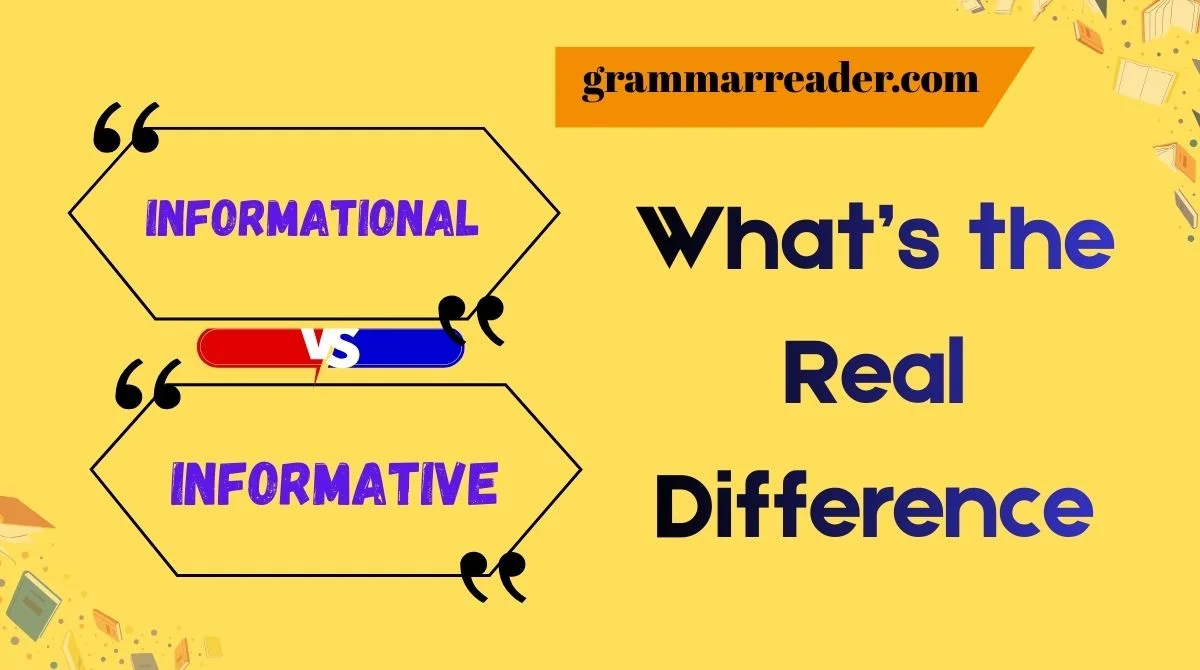
Understanding the difference between informational and informative content can transform the way you write, teach, market, or create digital content.
Many people treat these words like twins, but they’re more like cousins. Close—but not identical.
This guide breaks everything down in a simple, human, and practical way. Short paragraphs.
Clear examples. Useful tables. Real insights you can use today.
What Informational vs Informative Really Means
When you write, you either want to give facts or explain ideas. You might do both, but each purpose shapes your tone, structure, and approach.
Understanding the difference helps you:
- Improve writing quality
- Match search intent
- Create better marketing content
- Teach more effectively
- Build trust with readers
Let’s dive in.
Informational vs Informative: Core Definitions
What “Informational” Means
Informational content provides facts, data, or details, but it doesn’t attempt to explain them deeply. Think of it as “just the information, nothing more.”
In simple words
Informational = factual, straightforward, no explanations
Where you see informational content
- Government documents
- Company policies
- Product specifications
- Timetables and schedules
- Reports
- Medical leaflets
Example
- “This phone has a 6.2-inch display, 8GB RAM, and 256GB storage.”
(You get facts. No explanation of what they mean.)
What “Informative” Means
Informative content goes beyond the facts. It helps the reader understand, learn, and make sense of the information.
In simple words
Informative = explains, teaches, educates
Where you see informative content
- Tutorials
- Blog posts
- Explainers
- Educational social media posts
- Guides
- Online courses
Example
- “A 6.2-inch display offers more space for streaming and multitasking, making the phone ideal for entertainment.”
(You don’t just learn the fact. You learn what it means.)
Key Differences Between Informational and Informative
Below is a simple comparison table so you can visualize the difference.
| Feature | Informational | Informative |
|---|---|---|
| Purpose | Provide data | Explain data |
| Tone | Objective, factual | Engaging, helpful |
| Content depth | Surface-level | In-depth |
| Reader experience | Receives facts | Gains understanding |
| Examples | Reports, specs | Guides, tutorials |
A helpful mental image:
Informational content is the ingredients list. Informative content is the recipe.
Informational Texts: Features and Use Cases
Core Features of Informational Text
Informational writing sticks to the facts and avoids emotional or persuasive language. It’s clean, clear, and often structured for quick consumption.
Key features include:
- Factual accuracy
- Straightforward presentation
- Data-heavy structure
- No personal opinions
- Often formatted with lists, charts, or bullet points
Common Formats
You’ll find informational writing in:
- Product descriptions
- Technical manuals
- Medical information sheets
- Company reports
- Public instructions
- School textbooks (fact sections)
Where Informational Texts Fit Best
Informational text works best when readers want:
- Quick facts
- Technical details
- Straightforward answers
- Clear instructions
Organizations like hospitals, schools, agencies, and corporations rely heavily on this style because it promotes accuracy and clarity.
Informative Writing: Purpose, Style, and Characteristics
Purpose
Informative writing helps people learn, understand, and apply information. The tone is warm, clear, and conversational.
You’ll see informative content in:
- Online learning platforms
- How-to guides
- Social media explainers
- Teacher-led lessons
- Educational YouTube channels
Characteristics of Informative Writing
Strong informative writing includes:
- Clear explanations
- Examples and analogies
- Descriptions and comparisons
- Logical flow
- Personal tone
- Short sentences
- Reader-focused language
Common Formats
Informative content appears in:
- Tutorials
- Step-by-step guides
- FAQs
- Long-form blogs
- Podcasts
- Explainer videos
A strong informative piece makes the reader say, “Ahh, now I get it!”
Informational vs Informative in Practice
How Professionals Use Each Type
Businesses
- Informational: Policy updates, product specs
- Informative: Blog posts, onboarding guides
Teachers
- Informational: Reading materials
- Informative: Lesson explanations
Content Creators
- Informational: Infographics, data lists
- Informative: Educational videos
Marketers
- Informational: Fact sheets
- Informative: Content marketing
Researchers
- Informational: Data tables
- Informative: Insights, interpretations
Mistakes Writers Make (and How to Avoid Them)
Mistake 1: Giving only facts when people need explanations
Readers feel lost.
Fix: Add examples, reasons, and simple explanations.
Mistake 2: Overexplaining simple facts
Not everything needs a story.
Fix: Keep explanations where they add value.
Mistake 3: Mixing tones accidentally
A factual report shouldn’t sound like a blog.
Fix: Identify the purpose before writing.
Types of Informative Texts: A Quick Breakdown
These types appear widely in schools, articles, and digital content.
Expository
Explains a concept or idea.
Descriptive
Paints a picture using detailed language.
Comparative
Shows differences or similarities between topics.
Procedural
Teaches how to do something step-by-step.
Analytical
Breaks down data and explains meaning.
These aren’t fluff. These are the core, recognized types in educational writing.
The Role of Visual Aids in Both Types of Content
Visuals boost understanding and make content easier to digest.
Visuals for Informational Content
- Charts
- Graphs
- Tables
- Diagrams
These help people see the data.
Visuals for Informative Content
- Step-by-step illustrations
- Infographics
- Explainer animations
- Annotated screenshots
These visuals explain the data.
Why Visual Aids Improve Understanding
Research consistently shows that visuals:
- Improve memory retention
- Increase comprehension
- Help visual learners engage
- Break complex concepts into simple pieces
A useful quote here:
“If you can’t explain it simply, you don’t understand it well enough.” — Albert Einstein
Visuals help you explain things simply.
Real-World Examples
Informational Examples
- A product’s tech specifications
- A company’s privacy policy
- A school’s academic calendar
- A train schedule
- Government health instructions
Each of these tells you what is—not what it means.
Informative Examples
- A YouTube tutorial on how to use your new smartphone
- A TikTok explaining a scientific concept
- A blog post breaking down marketing strategies
- A teacher’s video lesson
These pieces help you learn, not just read facts.
SEO Angle: Search Intent Behind Both Terms
Google treats “informational” and “informative” differently based on user intent.
How Search Engines Interpret Informational Intent
People searching for:
- Facts
- Direct answers
- Definitions
- Statistics
- “What is…” queries
SEO Tip: Use concise, data-forward content for these queries.
How Search Engines Interpret Informative Content
People searching for:
- Guides
- Tutorials
- Topic breakdowns
- Explanations
- “How to…” queries
SEO Tip: Add examples, steps, and visuals.
Choosing the Right Keyword Based on Intent
Use “informational” when targeting:
- Data
- Facts
- Quick answers
Use “informative” when targeting:
- Educational topics
- Tutorials
- Deep explanations
A clear keyword strategy helps your content rank higher and reach the right readers.
FAQs
What does “informational” mean?
It refers to content that provides facts without explanations.
What does “informative” mean?
It refers to content that explains those facts so readers understand.
Can “informational” and “informative” be used interchangeably?
Not always. They overlap, but informational = facts and informative = explanations.
Why does the difference matter for writing?
Because tone, structure, and purpose change based on the type of content you’re creating.
Which type is better for SEO?
Both matter. Informational content ranks for factual queries. Informative content ranks for “how-to” queries.
Conclusion
Informational and informative writing serve different roles, but both are essential in communication. Informational content gives readers the facts. Informative content helps them make sense of those facts.
Once you understand how each style works, you can choose the right one for your audience, boost your search rankings, and create content that actually helps people.
When in doubt, ask yourself:
- Do I want to give facts or help someone understand?
The answer tells you exactly which writing style to use.

Aiden Brooks is an educational writer dedicated to simplifying grammar for learners of all levels. He creates clear, practical explanations that help students read, write, and understand English with confidence.