Mastering English word order feels a little like learning the rhythm of a song. When the beats fall in the right place, everything flows. When they don’t, the whole sentence sounds off.
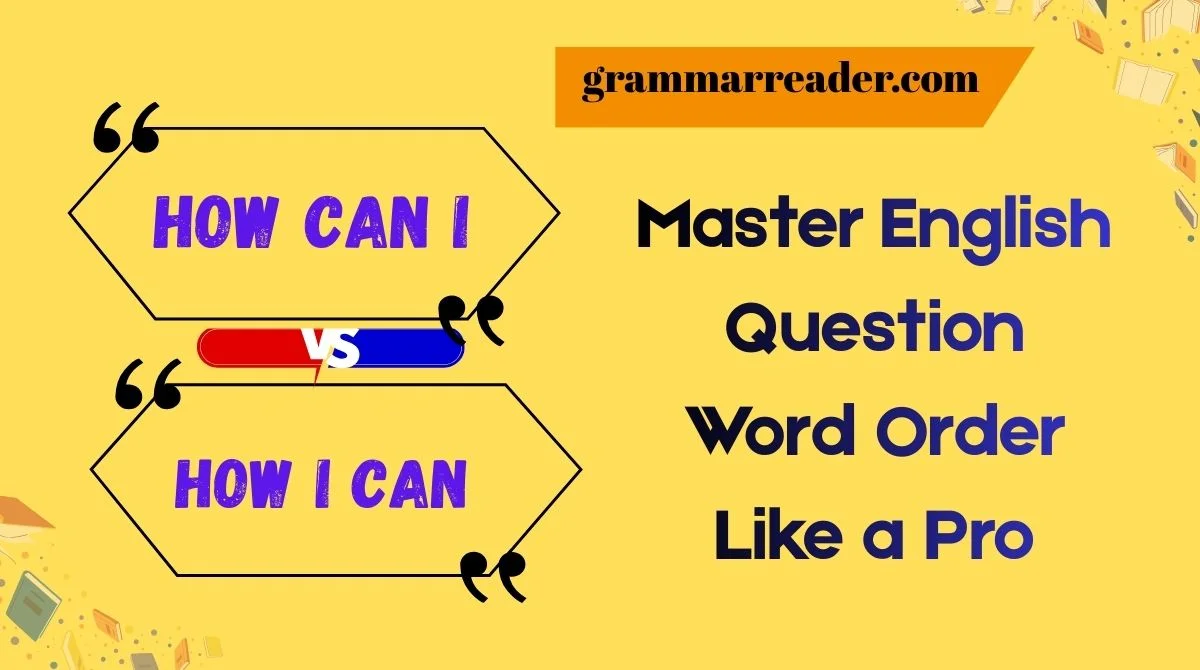
Nowhere is this more obvious than in the difference between “How can I” and “how I can.”
These two tiny phrases use the same words yet behave completely differently. One forms a direct question. The other appears inside indirect or embedded questions. If you’ve ever wondered why this happens—or wanted to understand the logic behind English question structure—you’re in the right place.
This guide stays practical, conversational and packed with examples, tables, case studies, quotes and deep, useful knowledge. By the end, you’ll never mix up how can I and how I can again.
How Can I vs How I Can: Understanding the Word Order Difference
English relies heavily on word order. Change it, and you change the entire function of a sentence. That small shift explains why we say:
- How can I help? (a real question)
but - Let me show you how I can help. (not a question)
Both are correct. Both are natural. Yet they communicate different intentions because of inversion, auxiliary verbs, and question structure.
Let’s build that understanding step-by-step.
Why Word Order Matters in English Questions
Imagine a map. English questions follow a specific route. If you follow it, you reach your destination—clear communication. If you take a wrong path, listeners get confused.
Key reasons word order matters:
- It signals whether you’re asking something or describing something.
- It shows whether the sentence is direct or polite/indirect.
- It reveals the sentence’s main clause and subordinate clause.
- It separates interrogatives from statements.
Before diving into how can I and how I can, let’s establish the structure behind all English questions.
Direct Questions in English (How Can I)
Direct questions follow a predictable order. You’ll see the same pattern again and again.
The Core Rule: Subject–Verb Inversion
In everyday English questions, the auxiliary verb moves before the subject. This is called inversion.
Normal statement:
I can fix it.
Direct question:
Can I fix it?
English uses this inversion to show that we are asking something, not making a statement.
Building Blocks of Direct Questions
Direct questions depend on three essential elements: question words, auxiliary verbs, and inversion.
Question Words (Wh-Words)
Common question words include:
- How – method or way
- Why – reason
- When – time
- Where – place
- What – thing or idea
- Who – person
- Which – choice
These words often lead a direct question. They don’t carry the grammatical weight alone though. That job falls to auxiliaries.
Auxiliary Verbs in Direct Questions
Auxiliary (or “helping”) verbs create the structure of a question.
Common auxiliary verbs:
- can
- should
- would
- do / does / did
- will
- could
- may / might
When forming a question, these auxiliaries come before the subject.
The Formula for Direct Questions
Every clear direct question using can follows this pattern:
Wh-word + Auxiliary verb + Subject + Base verb
Examples:
- How can I learn faster?
- When can I call you?
- Why can I see this file?
This structure explains why “How can I” is always the beginning of a direct question.
Direct Questions Using “How Can I”
“How can I” belongs in interrogative sentences. Whenever you want to ask about ability, method, or permission, you start with how can I + verb.
Why “How Can I” Works
Because it follows the inversion rule. The auxiliary (can) comes before the subject (I), which signals a direct question.
Examples of correct direct questions:
- How can I reset my password?
- How can I learn English quickly?
- How can I help you today?
- How can I make this process easier?
These sound natural, polite and clear.
Indirect Questions: Understanding “How I Can”
Now we switch gears. How I can does not form a question by itself. Instead, it appears inside indirect or embedded questions, which act as part of a larger statement or request.
What Makes a Question Indirect
Indirect questions:
- Don’t use inversion.
- Don’t function as stand-alone questions.
- Follow introductory phrases such as:
- I don’t know…
- Could you tell me…
- Let me show you…
- Do you remember…
- I wonder…
The tone becomes more polite and more formal.
Formula for Indirect Questions
Indirect questions follow this structure:
Introductory clause + Wh-word + Subject + Auxiliary + Verb
Example:
I don’t know how I can solve this.
(“I don’t know” = main clause → “how I can solve this” = embedded question)
Notice we don’t invert I and can here. No switching.
Common Introductory Clauses
You’ll hear these everywhere:
- I’m not sure…
- I need to understand…
- Could you explain…
- I wonder…
- Please explain…
- Let me see…
- Tell me…
Indirect questions often soften tone, which makes them sound more polite.
Examples of Indirect Questions Using “How I Can”
- I’m trying to figure out how I can improve this project.
- She explained how I can submit the form.
- Could you tell me how I can fix this error?
- Let me show you how I can help.
- They’re discussing how I can contribute more.
Here, “how I can” works perfectly because it sits inside another clause.
Embedded Questions: When “How I Can” Appears Inside Larger Sentences
Embedded questions behave like noun clauses. They are grammatically part of a bigger sentence, not complete questions.
They are used in:
- explanations
- reports
- thoughts
- descriptions
Examples:
- This guide explains how I can improve my writing.
- The manager reviewed how I can increase efficiency.
- The coach demonstrated how I can adjust my technique.
Again, no inversion, no question mark.
How Can I vs How I Can: Word Order Comparison
Here’s a simple table to make everything visual and memorable:
| Phrase | Usage | Structure | Example |
|---|---|---|---|
| How can I…? | Direct question | Wh-word + Auxiliary + Subject + Verb | How can I improve? |
| how I can… | Indirect/embedded | Wh-word + Subject + Auxiliary + Verb | Tell me how I can improve. |
Key Insight
If your sentence asks something → use how can I
If your sentence contains a question inside a statement → use how I can
Why Reversing the Order Causes Mistakes
English learners often write:
❌ How I can help you?
This is incorrect because it mixes the direct-question intention with indirect-question structure.
To fix it:
- As a real question → How can I help you?
- As part of a statement → Let me know how I can help you.
Variations: Why Can I / When Can I
The same inversion rules apply to other question forms.
Direct Questions
- Why can I access this file?
- When can I schedule the appointment?
- Where can I find the document?
Indirect Questions
- Please explain why I can access this file.
- Tell me when I can pick up the order.
- I’m figuring out where I can get more information.
Once you master the inversion rule, all these variations become predictable.
The Big Picture: Why Word Order Shapes Meaning
Understanding how can I vs. how I can isn’t just grammar; it’s communication power.
Three reasons word order matters:
1. It clarifies intention
Are you asking or describing?
2. It affects tone
Direct questions can sound abrupt.
Indirect ones soften requests.
3. It determines correctness
English relies on placement more than endings or tones.
A simple switch of two words changes everything.
Case Study: Real Conversation Example
Let’s look at how this plays out in a real conversation.
Scenario: A customer needs help resetting a password.
Customer:
“How can I reset my password?”
(direct, clear question)
Support Staff:
“I’ll show you how I can walk you through the steps.”
(embedded explanation)
If the customer instead said:
❌ “How I can reset my password?”
It would sound unnatural, confusing and grammatically incorrect.
Expert Tip: Quick Test for Correct Word Order
Ask yourself:
Does this sentence ask something directly?
→ Use how can I
Does this sentence describe the method within another statement?
→ Use how I can
This one-second test works every time.
5 FAQs About “How Can I” vs “How I Can”
What’s the difference between “how can I” and “how I can”?
How can I forms a direct question.
How I can appears inside indirect or embedded questions.
Is “how I can help you” correct?
It’s correct only in a sentence like Let me know how I can help you.
As a question, it must be How can I help you?
When should I use “how I can”?
Use it when the phrase follows another clause, often for politeness or clarity.
Why does English use inversion in questions?
Inversion signals that a sentence is a question. It moves the auxiliary verb before the subject.
Can I use “how can I” to offer assistance?
Yes. It’s one of the most natural ways to ask someone what they need.
Conclusion
The difference between how can I and how I can might look small, but it shapes clarity, tone and meaning. English questions live and breathe through inversion, auxiliary verbs and word order.
Once you understand these mechanics, you unlock a clearer, more confident way of speaking and writing.
Whenever you’re unsure, follow the simple rule:
- Real question? → “How can I”
- Part of a larger statement? → “How I can”
Master this—and you’ll never hesitate again.

Aiden Brooks is an educational writer dedicated to simplifying grammar for learners of all levels. He creates clear, practical explanations that help students read, write, and understand English with confidence.