
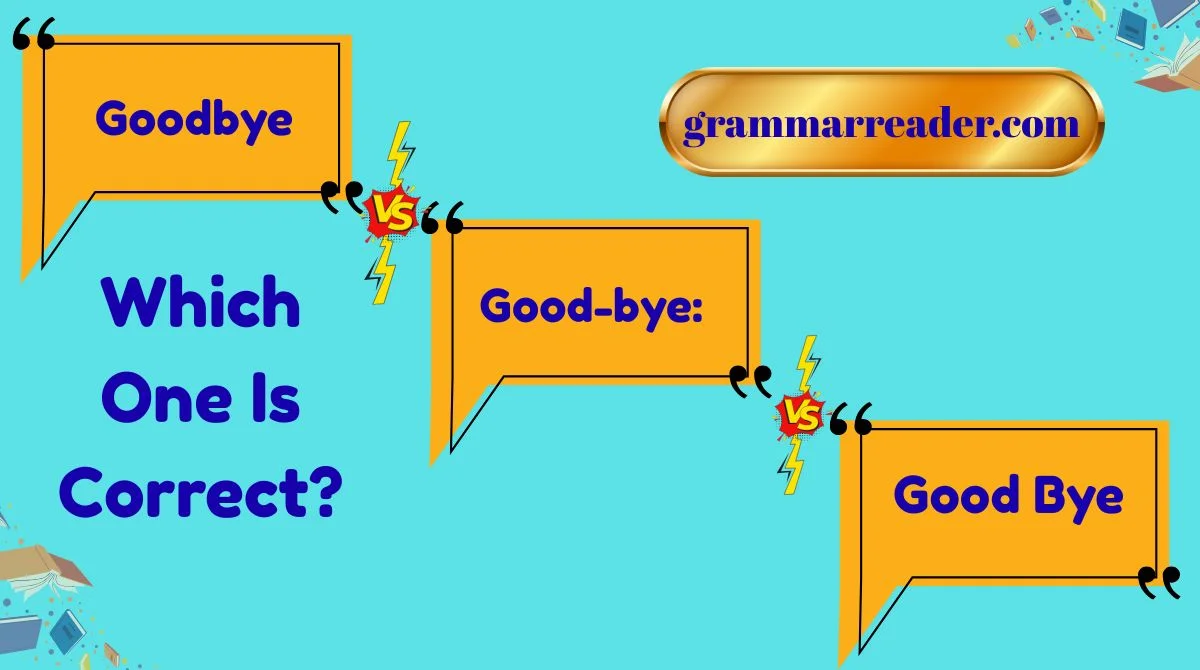
Few English words feel as familiar as goodbye, yet few cause as much spelling confusion. People write good bye in emails, use good-bye in older texts, and hesitate before hitting send.
The doubt sneaks in quietly. Is goodbye one word? Two words? Or should it wear a hyphen?
This guide clears up that confusion completely.
You’ll learn the correct spelling of goodbye, why older versions still appear, how dictionaries treat each form, and how to choose the right farewell in real-life writing.
By the end, you won’t pause again when saying goodbye—on paper or on screen.
Why “Goodbye” Causes So Much Confusion
At first glance, goodbye looks simple. It combines two familiar words: good and bye. That combination tempts writers to split it apart or add a hyphen.
Language history plays a role here. So does habit. So does autocorrect.
The result?
Three versions floating around at once:
- goodbye
- good-bye
- good bye
Only one works in modern standard English.
Goodbye vs Good Bye vs Good-bye: The Direct Answer
Let’s be clear from the start.
Goodbye is the correct spelling in modern English.
- Goodbye → correct and standard
- Good-bye → outdated but historically valid
- Good bye → incorrect today
If you remember nothing else, remember this:
Goodbye is one word.
Why Goodbye Is the Standard Form Today
English constantly evolves. Words that once needed spaces or hyphens often merge over time. Goodbye followed that exact path.
Today, goodbye is a closed compound word. That means two words joined permanently into one.
Other examples of closed compounds include:
- notebook
- football
- website
- bathroom
At one point, these were written separately or with hyphens. Usage changed. Spelling followed.
The same thing happened with goodbye.
What Happened to Good-bye?
You’ll still see good-bye in:
- older books
- classic literature
- historical letters
- early 20th-century writing
The hyphen made sense at the time. Writers used it to show a word in transition.
Over time, the hyphen faded. Writers stopped needing it. Editors dropped it. Readers expected the single-word form.
Today, good-bye feels old-fashioned. It isn’t wrong in a historical sense, but it’s no longer preferred in modern writing.
Is Good Bye Ever Correct?
Short answer: no.
Writing good bye as two separate words is considered incorrect in modern English.
Why does this mistake happen so often?
- People hear “good” and “bye” separately
- The word “bye” exists on its own
- Spellcheck doesn’t always flag it
- Informal texting habits bleed into formal writing
Still, in standard written English, good bye is a spelling error.
How Dictionaries and Style Guides Treat Goodbye
Modern dictionaries agree on one thing.
They list goodbye as the primary and correct spelling.
Some dictionaries may mention good-bye as an older or alternative form, usually marked as dated or less common. Very few recognize good bye at all.
Style guides follow the same rule.
- Journalism prefers goodbye
- Academic writing prefers goodbye
- Professional communication prefers goodbye
When consistency matters, the one-word form always wins.
The Real History of the Word Goodbye
This word didn’t start as a casual farewell. Its roots are surprisingly serious.
From “God Be With Ye” to Goodbye
The original phrase was “God be with ye.”
Over time, spoken English shortened it:
- God be with ye
- God b’wye
- Good-bye
- Goodbye
Pronunciation changed first. Spelling followed later.
This explains two things:
- Why goodbye looks unusual
- Why it once used a hyphen
The word slowly lost its religious weight and became a neutral farewell.
Why Goodbye Changed but Still Confuses Writers
Language evolution rarely happens cleanly.
Spoken language moves fast. Written language lags behind. Old spellings stick around in books, signs, and memory.
Goodbye sits in that awkward space where:
- People know the word
- But don’t remember the rule
Compound words often cause this exact problem. Writers hesitate, then guess.
Clear rules remove that guesswork.
Common Misconceptions About Saying Goodbye
Misconception: Goodbye Is Too Formal
Some people think goodbye sounds stiff or serious.
That’s not true.
Goodbye works perfectly in:
- casual conversation
- friendly emails
- everyday writing
Tone comes from context, not just the word.
“Goodbye, see you tomorrow” sounds relaxed.
“Goodbye forever” sounds serious.
Same word. Different weight.
Misconception: All Spellings Are Acceptable
English allows variation, but not everything goes.
Only goodbye fits modern spelling standards.
Using good bye in professional writing looks careless. Using good-bye looks outdated.
Accuracy still matters.
Misconception: “Bye” Is Improper
The word bye is perfectly acceptable.
It’s simply informal.
Examples:
- Bye, see you later
- Bye for now
Just remember:
bye is a different word than goodbye.
Goodbye in Real-Life Writing Contexts
Casual Conversation
In texts and chats, goodbye often shortens to bye.
Examples:
- Bye, talk later
- Goodbye, have a great night
Both work. Tone decides.
Professional and Workplace Writing
In emails and meetings, goodbye is safe and neutral.
Examples:
- Goodbye, and thank you for your time
- Goodbye, I look forward to our next meeting
Avoid good bye. It looks unpolished.
Formal Writing
Formal letters, announcements, and official communication favor goodbye.
Examples:
- Goodbye and best wishes
- We bid you goodbye
The single-word form keeps things clean and correct.
Creative Writing and Dialogue
Writers may choose variations for style or voice.
A historical novel might use good-bye.
A modern story sticks with goodbye.
Character voice matters, but clarity still comes first.
Goodbye vs Bye vs See You: Tone and Intent
Word choice affects emotional tone.
Goodbye
- neutral
- complete
- sometimes final
Bye
- casual
- friendly
- informal
See you
- warm
- temporary
- assumes return
Examples show the difference clearly:
“Goodbye.”
Feels final.
“Bye!”
Feels light.
“See you soon.”
Feels reassuring.
Choose based on the moment.
Common Errors to Avoid When Writing Goodbye
Mistakes repeat because people overthink.
Avoid these traps:
- splitting goodbye into two words
- adding an unnecessary hyphen
- assuming casual speech equals correct spelling
One word solves all of them.
Quick Comparison: Goodbye vs Good-bye vs Good Bye
| Form | Correct Today? | Usage |
|---|---|---|
| goodbye | Yes | Standard modern English |
| good-bye | Rare | Old-fashioned or stylistic |
| good bye | No | Incorrect |
This table alone answers most questions.
Why Correct Spelling of Goodbye Matters
Small errors send big signals.
Correct spelling shows:
- attention to detail
- language confidence
- professionalism
Readers may not comment on mistakes, but they notice them.
Clean writing builds trust quietly.
FAQs About Goodbye
What is the correct spelling: goodbye, good-bye, or good bye?
The correct modern spelling is goodbye, written as one word.
Why is goodbye no longer hyphenated?
The hyphen faded as the word evolved into a permanent compound.
What is the origin of the word goodbye?
It comes from the phrase “God be with ye.”
Is goodbye too formal for casual use?
No. Goodbye works in both casual and formal contexts.
Does American and British English treat goodbye differently?
No. Both prefer goodbye as the standard spelling.
Final Takeaway
Keep it simple.
If you’re writing today, choose goodbye.
No space.
No hyphen.
No hesitation.
That one decision keeps your writing clear, modern, and correct—every time you say goodbye.

Aiden Brooks is an educational writer dedicated to simplifying grammar for learners of all levels. He creates clear, practical explanations that help students read, write, and understand English with confidence.