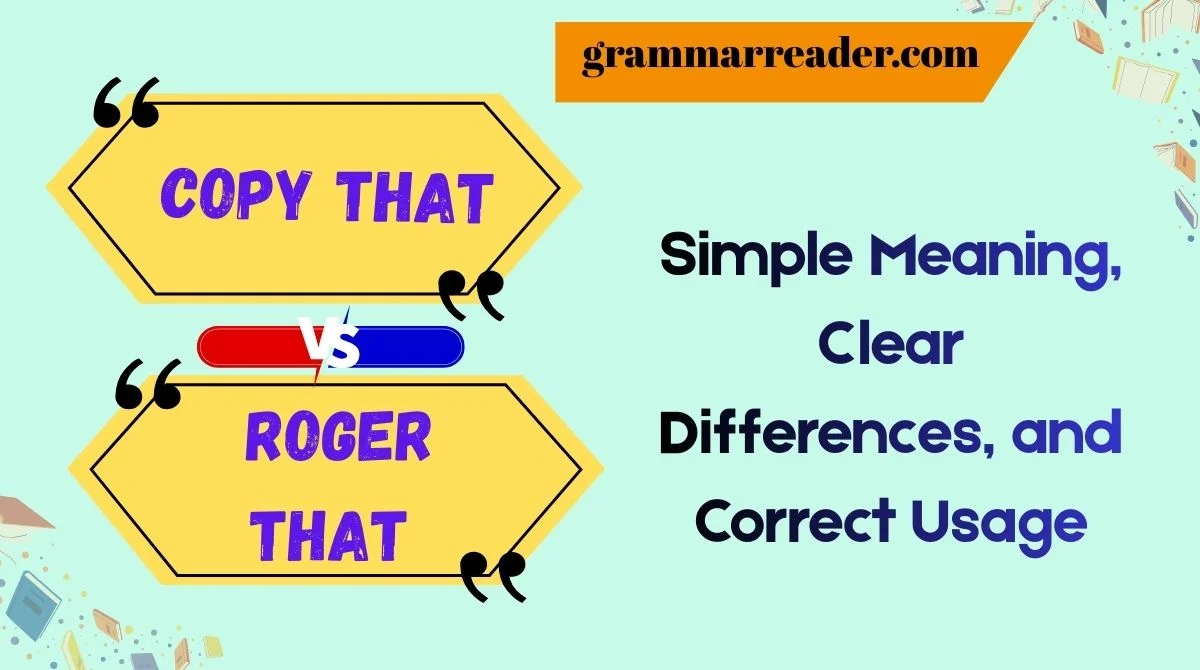
People often use copy that and roger that as if they mean the same thing. They sound similar. Movies mix them up. Daily conversation makes the confusion worse.
But in reality, these two phrases have different meanings.
Once you understand them, they become very easy to use. This article explains Copy That vs Roger That in simple, clear language. No complex words. No heavy explanations. Just real meaning, clear examples, tables, and practical advice.
Why People Get Confused
Most confusion comes from three things:
- Movies and TV shows use radio language incorrectly
- People repeat phrases without knowing their meaning
- Both phrases come from military and radio communication
In radio communication, words must be short and clear. Mistakes can cause real problems. That’s why these phrases exist.
What Does “Copy That” Mean?
Simple Meaning
Copy that means:
“I heard you and I understand.”
That’s all it means.
It does not mean:
- I agree
- I will do it
- I promise anything
It only confirms understanding.
Think of it like saying:
- “Got it”
- “I understand”
- “Okay, I hear you”
Where “Copy That” Comes From
The word copy comes from old radio systems.
Radio messages were often unclear. Static made words hard to hear. So people needed a fast way to say:
“I understood your message.”
That’s how copy became common.
How “Copy That” Is Used Today
People now use copy that in many situations:
- Offices
- Team chats
- Phone calls
- Text messages
It works best when:
- Someone gives information
- No action is required
Examples of “Copy That”
At work
“The meeting starts at 10 a.m.”
Copy that.
At home
“Please turn off the lights.”
Copy that.
In a group chat
“I shared the document.”
Copy that.
In all these cases, the speaker is only saying,
“I understand.”
What Does “Roger That” Mean?
Simple Meaning
Roger that means:
“I received your message.”
It confirms that the message arrived. It often sounds more serious than “copy that.”
Where “Roger” Comes From
Long ago, radio users used special words for letters.
The letter R meant Received.
The word used for R was Roger.
So when someone said “Roger,” they meant:
“I received your message.”
That meaning stayed over time.
How “Roger That” Is Used Today
People use roger that when:
- Instructions are given
- Someone is in charge
- The situation feels serious
You may hear it in:
- Emergency services
- Security teams
- Aviation
- Workplaces
Examples of “Roger That”
Manager
“Finish this by noon.”
Roger that.
Emergency
“Clear the area now.”
Roger that.
Team leader
“Move to the next spot.”
Roger that.
It sounds firm and confident.
Copy That vs Roger That: The Simple Difference
Here is the easiest way to remember it:
- Copy that = I understand
- Roger that = I received
Both confirm hearing the message.
Neither promises action.
What They Do NOT Mean
This is very important.
Neither phrase means:
- I agree
- I will do it
- I promise to act
Many people think “roger that” means action. It does not.
Copy That vs Roger That Comparison Table
| Point | Copy That | Roger That |
|---|---|---|
| Confirms hearing | Yes | Yes |
| Confirms understanding | Yes | Yes |
| Promises action | No | No |
| Sounds serious | No | Yes |
| Common in daily use | Yes | Yes |
A Word That Actually Means Action: Wilco
What Does “Wilco” Mean?
Wilco means:
“I will do it.”
It comes from the phrase Will Comply.
When someone says wilco, they mean:
- I heard you
- I understand
- I will take action
Example of Wilco
Instruction
“Start the backup now.”
Correct reply
Wilco.
That one word confirms action.
Other Radio Words People Often Misuse
Over
Over means:
“I am done speaking. Your turn.”
It does not mean goodbye.
Out
Out means:
“The conversation is finished.”
No reply is expected.
Why “Over and Out” Is Wrong
Movies made this phrase popular. Real radio users do not use it.
- Over means continue talking
- Out means stop talking
Using both together makes no sense.
Why Radio Language Is Short and Simple
Radio language follows clear rules:
- Short words
- Clear sounds
- Less confusion
That’s why:
- “Copy” is better than “I understand completely”
- “Roger” is better than “Yes, I received your message”
Short words save time and reduce mistakes.
How Movies and TV Shows Caused Confusion
Movies often:
- Mix radio terms
- Use wrong phrases
- Focus on drama instead of accuracy
People then repeat what they hear. Over time, wrong usage becomes common.
Common Mistakes People Make
Here are the most common errors:
- Using roger to mean agreement
- Using copy as a promise
- Mixing radio words randomly
- Copying movie dialogue
Clear communication needs correct words.
Case Study: A Simple Communication Failure
Situation
A supervisor says:
“Watch the system and report problems.”
The reply:
Copy that.
The supervisor thinks action will happen.
The worker thinks only understanding was required.
Result
- No action taken
- Problem grows
- Time wasted
Correct reply
Roger. Wilco.
That confirms action clearly.
Which One Should You Use?
Use this simple guide:
- Information only → Copy that
- Instructions given → Roger that
- Action required → Wilco
When clarity matters, choose carefully.
FAQs
What does copy that mean?
It means you heard and understood the message.
What does roger that mean?
It means you received the message.
Are copy that and roger that the same?
No. They confirm different things.
When should I use copy that vs roger that?
Use copy for information. Use roger for instructions.
What does wilco mean?
It means “I will do it.”
Conclusion
Copy That vs Roger That is not about sounding cool. It’s about being clear.
- Copy confirms understanding
- Roger confirms receipt
- Wilco confirms action
When communication matters, clear words win every time.

Aiden Brooks is an educational writer dedicated to simplifying grammar for learners of all levels. He creates clear, practical explanations that help students read, write, and understand English with confidence.