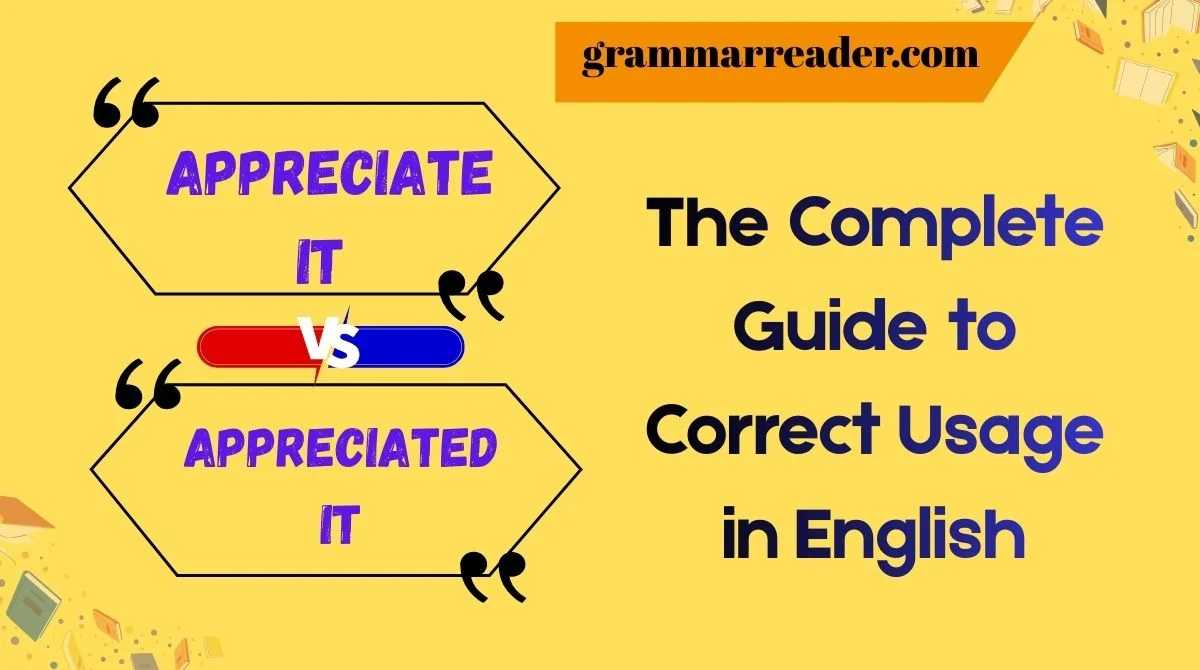
Small phrases often carry big meaning in English. “Appreciate it” and “appreciated it” look almost identical, yet they work in very different situations.
One tiny tense shift can change timing, tone, and intent.
You’ve probably used appreciate it dozens of times today without thinking. That’s normal. Native speakers rely on it constantly.
But when you switch to appreciated it, things suddenly feel heavier, more distant, and sometimes awkward if used incorrectly.
This guide clears the confusion completely.
You’ll learn exactly when to use appreciate it vs appreciated it, how tense controls meaning, and why native speakers instinctively choose one over the other.
By the end, these phrases won’t feel interchangeable anymore. They’ll feel precise.
Understanding “Appreciate It” in Modern English
Appreciate it is rooted in the present tense, but its meaning stretches slightly into the future. It expresses gratitude, acknowledgment, or goodwill for something that is happening now or is expected to happen soon.
Most importantly, it feels immediate.
What “Appreciate It” Really Means
At its core, appreciate it means:
- I am thankful right now
- I value this action or offer
- I recognize your effort
The full sentence is usually implied, not spoken:
I appreciate it.
English speakers drop the subject because it sounds more natural and conversational.
When to Use “Appreciate It” Correctly
Present-Tense Gratitude
Use appreciate it when the action is happening now or just occurred.
Examples:
- You fixed the issue quickly. Appreciate it.
- Thanks for the update. I appreciate it.
- You explained that clearly. Appreciate it.
The gratitude feels live and active.
Near-Future Gratitude
One unique feature of appreciate it is that it can thank someone before the action is completed.
Examples:
- I’ll review the file later. Appreciate it.
- Please send the report by Friday. Appreciate it.
- Let me know when you arrive. Appreciate it.
Here, the speaker shows trust and goodwill in advance. This makes the phrase sound polite and cooperative.
“Appreciate It” as a Polite Response
Native speakers often use appreciate it instead of “thank you” because it sounds warmer and less formal.
Common situations:
- Accepting help
- Responding to instructions
- Ending short professional exchanges
Examples:
- “I’ll take care of that for you.”
“Appreciate it.” - “Here’s the information you asked for.”
“Appreciate it.”
The phrase acknowledges effort, not just politeness.
Grammar Breakdown of “Appreciate It”
Let’s look under the hood.
- Verb: appreciate (present tense)
- Object: it (refers to the action, favor, or effort)
- Subject: implied “I”
Even though the subject isn’t spoken, the sentence remains grammatically complete.
That implied structure is why appreciate it sounds natural in American English but can confuse learners.
Why “Appreciate It” Sounds So Natural in American English
American English favors efficiency and warmth. Short phrases that feel human win.
Reasons native speakers love appreciate it:
- Faster than “thank you very much”
- Warmer than “thanks”
- Neutral in professional and casual settings
- Signals respect without formality
In many workplaces, appreciate it is the default response.
What “Appreciated It” Actually Means
Appreciated it lives firmly in the simple past tense.
It refers to gratitude for something that:
- Happened earlier
- Is fully completed
- Is no longer ongoing
This phrase feels reflective, not immediate.
Core Meaning of “Appreciated It”
When you say appreciated it, you’re saying:
- The action is finished
- The gratitude belongs to the past
- The moment has passed
This makes it sound more formal or distant.
When to Use “Appreciated It” Correctly
Completed Past Situations
Use appreciated it when looking back on an event.
Examples:
- I appreciated it when you helped me move last year.
- She appreciated it after the project was completed.
- They appreciated it once everything was resolved.
The key word here is after.
Writing and Storytelling Contexts
Appreciated it appears more often in writing than speech.
Examples:
- He appreciated it but didn’t say anything at the time.
- Looking back, she appreciated it more than she realized.
- The team appreciated it once they understood the effort involved.
This tense adds emotional distance, which fits storytelling and reflection.
Why “Appreciated It” Sounds Wrong in Live Conversations
Imagine this exchange:
“I’ll help you with that now.”
“Appreciated it.”
It feels off. Why?
Because appreciated it suggests the help already happened. The timing doesn’t match reality. That mismatch is what makes the phrase sound unnatural.
Appreciate It vs Appreciated It: Side-by-Side Grammar Comparison
| Phrase | Verb Tense | Time Reference | Best Use |
|---|---|---|---|
| appreciate it | present | now or near future | conversations, responses |
| appreciated it | past | completed past | reflection, writing |
This table explains nearly every usage case.
The Real Contextual Difference Between Appreciate It and Appreciated It
The difference isn’t politeness.
It’s timing.
Appreciate It Signals:
- Gratitude now
- Ongoing goodwill
- Active engagement
Appreciated It Signals:
- Gratitude then
- Completed interaction
- Emotional distance
Choosing the wrong one breaks the timeline.
Real-Life Examples of “Appreciate It” in Context
Workplace Examples
- “I’ll update the document today.”
“Appreciate it.” - “Thanks for staying late.”
“Really appreciate it.”
Customer Service Examples
- “Your issue has been escalated.”
“Appreciate it.” - “We’ll follow up tomorrow.”
“Appreciate it.”
Casual Conversation Examples
- “I’ll grab coffee for us.”
“Appreciate it.” - “I’ll text you later.”
“Appreciate it.”
Real-Life Examples of “Appreciated It” in Context
Professional Writing
- The client appreciated it once the issue was resolved.
- Management appreciated it after reviewing the results.
Personal Reflection
- I didn’t say much, but I appreciated it deeply.
- Years later, she appreciated it more than ever.
Notice how these examples look backward.
How Native Speakers Choose Between These Phrases
Native speakers don’t think in grammar rules. They think in timeframes.
They ask themselves subconsciously:
- Is this happening now?
- Or did it already finish?
That’s it.
If it’s happening now, appreciate it comes out naturally.
If it’s over, appreciated it fits.
Common Mistakes Learners Make
Using “Appreciated It” Too Early
This is the most common error.
Wrong:
- “I’ll fix it for you.”
“Appreciated it.”
Correct:
- “I’ll fix it for you.”
“Appreciate it.”
Overusing “Appreciate It” in Formal Writing
In formal writing, appreciate it can feel too casual.
Better alternatives include:
- I appreciate your assistance.
- We appreciate your cooperation.
Confusing Gratitude With Completion
Gratitude does not always mean the action is finished. That’s where tense matters most.
Simple Memory Rules to Never Mix Them Up
Time Rule
If the action isn’t finished yet, use appreciate it.
Conversation Rule
If you’re speaking live, appreciate it almost always wins.
Writing Rule
If you’re reflecting or summarizing the past, appreciated it fits better.
Case Study: One Phrase, Two Outcomes
Situation
A manager emails an employee who offers help.
Response A:
“Appreciate it.”
Meaning:
The help is welcome and expected.
Response B:
“Appreciated it.”
Meaning:
The help already happened or is no longer needed.
One letter changes the message entirely.
Why Tense Accuracy Shapes Professional Image
Correct tense shows:
- Clear thinking
- Emotional awareness
- Strong communication skills
Small mistakes don’t just confuse meaning. They quietly damage credibility.
As one writing expert put it:
“Grammar isn’t about rules. It’s about respect for the reader.”
FAQs About Appreciate It vs Appreciated It
What’s the main difference between appreciate it and appreciated it?
Appreciate it is present tense. Appreciated it refers to the completed past.
Can I use appreciate it in professional emails?
Yes, but it works best in short, conversational emails rather than formal letters.
Is appreciated it grammatically correct?
Yes, but only when referring to past, completed actions.
Why do Americans say appreciate it so often?
It balances politeness and efficiency, which suits American conversational style.
Can appreciated it sound cold?
Yes, if used too early or in live conversation, it can feel distant.
Final Takeaway
Here’s the rule that never fails:
If the action is now or expected, say appreciate it.
If the action is finished, say appreciated it.
That’s the difference.
Once you tie tense to timing, these phrases stop feeling confusing. They start feeling intentional. And your English instantly sounds more natural.

Aiden Brooks is an educational writer dedicated to simplifying grammar for learners of all levels. He creates clear, practical explanations that help students read, write, and understand English with confidence.